
 |
Exhaust Manifolds Choose Your Manufacturer |
 |






Marine Exhaust Manifolds
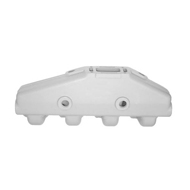
Marine exhaust manifolds collect exhaust gases from an inboard or sterndrive engine’s cylinders and direct them toward the exhaust outlet. Unlike most automotive manifolds, many boat exhaust manifolds contain water jackets that help control exhaust-system temperature in the engine compartment.
Cooling water typically travels through passages surrounding the exhaust path before entering the exhaust stream at a specified point in the riser or elbow. The exact flow path varies by engine and exhaust-system design, making it important to use components intended for the specific marine application.
Marine Exhaust Manifold Components
Wholesale Marine carries replacement marine exhaust manifolds and related components for popular inboard and sterndrive engines. Depending on the application, an exhaust system may use:
- Exhaust manifolds: Collect exhaust gases from the cylinder-head exhaust ports and provide cooling passages around the exhaust path.
- Risers or spacers: Increase the height between the manifold and exhaust elbow to help achieve the required exhaust-system configuration.
- Exhaust elbows: Direct exhaust gases and cooling water toward the exhaust hose or downstream exhaust system.
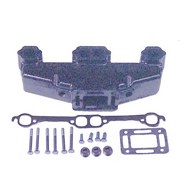
- Gaskets and block-off plates: Seal mating surfaces and control water flow according to the cooling-system design.
- Drain plugs and pipe plugs: Close specified manifold and cooling-passage openings.
- Exhaust shutters and tubes: Help manage exhaust flow and reduce water entry in compatible systems.
A marine exhaust manifold kit may contain manifolds, risers, elbows, gaskets, plugs, or installation hardware. Kit contents vary, so review the individual product listing before ordering.
Choosing a Marine Exhaust Manifold or Riser Kit
Marine exhaust manifold and riser kits are application-specific. Components that appear similar may differ in port design, bolt pattern, cooling passages, height, outlet angle, port or starboard orientation, and wet-joint or dry-joint construction.
Before selecting a replacement, verify:
- Engine manufacturer
- Engine model and displacement
- Model year or production range
- Engine serial or model number
- Raw-water or closed-cooling configuration
- Wet-joint or dry-joint exhaust design
- Riser height and exhaust-elbow angle
- Port, starboard, or interchangeable installation
- Existing manifold and riser part numbers
- Required gaskets, plugs, and mounting hardware
Do not select an inboard exhaust manifold based only on the engine displacement or the component’s appearance. Consult the engine parts catalog, service manual, or manufacturer application information to confirm compatibility.
Signs of a Damaged Boat Exhaust Manifold
Marine exhaust manifolds operate around heat, moisture, corrosive exhaust gases, and cooling water. Possible signs of deterioration or leakage include:
- Visible rust, corrosion, cracking, or scaling
- External water or exhaust leaks
- Rust streaks around manifold, riser, or elbow joints
- Overheating or unusually hot exhaust-system components
- Reduced engine performance or rough operation
- Water found in an exhaust port or engine cylinder
- Recurring gasket failure
- Unusual exhaust odor or evidence of an exhaust leak
These symptoms do not always confirm a failed manifold. Cooling-system restrictions, damaged hoses, leaking gaskets, improper installation, internal engine problems, or other exhaust components can cause similar symptoms.
A suspected exhaust or cooling-water leak should be investigated promptly. Internal leakage may allow water to enter the exhaust ports or cylinders, while an exhaust-gas leak can create a carbon-monoxide hazard.
Marine Exhaust Manifold Inspection and Replacement
There is no universal replacement interval for every marine exhaust manifold. Service life varies with the component design, material, water conditions, cooling-system configuration, engine use, storage, flushing practices, and maintenance history. Follow the inspection and replacement guidance provided by the engine manufacturer.
When servicing a marine manifold and riser assembly:
- Allow the engine and exhaust system to cool completely.
- Drain the cooling system as required by the service procedure.
- Photograph and label hoses, fittings, and connections before removal.
- Inspect manifolds, risers, elbows, spacers, and mating surfaces for corrosion or damage.
- Use the correct gaskets for the cooling-system configuration.
- Replace disturbed seals, gaskets, and corroded hardware as directed.
- Install parts in the correct position and orientation.
- Tighten fasteners in the specified sequence and to the specified torque.
- Check for cooling-water and exhaust leaks after installation.
Exhaust manifolds are heavy, and installation errors can permit water or exhaust gases to leak. Have the system serviced by a qualified marine technician if you do not have the correct parts information, tools, or repair experience.
Shop Boat Exhaust Manifolds at Wholesale Marine
Wholesale Marine carries marine exhaust manifolds, risers, elbows, spacers, gaskets, plugs, and replacement kits for Chris-Craft, Chrysler Inboard, Crusader, MerCruiser, OMC, PleasureCraft, and Volvo Penta engines. Choose your engine manufacturer above to shop compatible exhaust components.
If you need help identifying the correct boat exhaust manifold or marine manifold and riser kit, call our customer-service team at 877-388-2628. Have the engine manufacturer, model, displacement, year, serial number, cooling-system type, and existing part numbers available when possible.
Marine Exhaust Manifold FAQs
What does a marine exhaust manifold do?
A marine exhaust manifold collects exhaust gases from the engine’s cylinders and directs them toward the exhaust outlet. Many marine manifolds also contain water jackets that help control exhaust-system temperature.
What is the difference between an exhaust manifold and a riser?
The manifold attaches to the cylinder head and collects exhaust gases. A riser or spacer is installed above the manifold in compatible systems to achieve the required exhaust height and configuration. An exhaust elbow then directs the exhaust toward the downstream exhaust system. The exact arrangement varies by engine.
How long do marine exhaust manifolds last?
There is no single service-life estimate for every manifold. Longevity depends on material, design, saltwater or freshwater use, raw-water or closed cooling, engine hours, storage, flushing, and maintenance. Follow the engine manufacturer’s inspection and replacement guidance.
What are the signs of a bad boat exhaust manifold?
Possible signs include external corrosion, cracking, water or exhaust leaks, rust around gasket joints, overheating, unusual exhaust odor, or water entering an exhaust port or cylinder. These symptoms require prompt inspection because other cooling or engine problems may produce similar signs.
Should exhaust manifolds and risers be replaced together?
The correct repair depends on the condition and service history of each component and the engine manufacturer’s procedures. When one part has significant internal corrosion, the adjoining manifolds, risers, elbows, gaskets, and mating surfaces should also be inspected.
What is the difference between wet-joint and dry-joint exhaust manifolds?
Wet-joint and dry-joint systems use different cooling-water passage and sealing arrangements between the manifold and elbow or riser. Their components and gaskets are not automatically interchangeable. Confirm the exhaust design using the engine serial number and manufacturer parts information.
How do I find the correct marine exhaust manifold?
Match the manifold using the engine manufacturer, model, displacement, year, serial number, cooling-system configuration, exhaust design, riser height, elbow angle, and existing part numbers. Do not select a manifold using engine size alone.