

Safe boating isn't just about luck - it's about preparation. From quiet lakes to wide-open seas, most accidents on the water can be prevented with the right habits, gear, and awareness. Whether you’re just starting out or have been boating for years, a few smart safety steps can make every trip more enjoyable - and far less stressful.
At Wholesale Marine, we carry everything you need to stay safe on the water, from Coast Guard-approved life jackets to fire extinguishers and marine radios. In this guide, we'll cover the essentials: safety gear, smart boating practices, and what to do when things don't go according to plan.

Why Boat Safety Matters
Every year, the U.S. Coast Guard reports that most boating accidents that could have been prevented – often by wearing a life jacket, checking the weather, or keeping a better lookout. Over 80% of fatal incidents involve someone who wasn’t wearing a personal flotation device (PFD).
Good habits don’t just protect you – they protect your passengers, your boat, and everyone else sharing the water. Knowing how to respond in an emergency and staying aware of your surroundings gives you confidence and peace of mind no matter where you go.
Pre-Departure Boat Safety Checklist
Before you turn the key, take five minutes to run through this quick safety checklist. It’s one of the simplest ways you can prevent issues later on.
Before you Launch
- Check the weather forecast and avoid heading out in questionable conditions.
- File a float plan – let someone on shore know your destination and when you plan to return.
- Confirm fuel, oil, and battery levels are adequate for your trip.
- Inspect your navigation lights, horn and radio for proper operation.
- Make sure all life jackets and throwable devices are on board and in good condition.
- Test your fire extinguisher to ensure its charged and accessible.
- Bring a first aid kit, flashlight, and a few spare tools just in case.
Running through this list takes only a few minutes but can save you hours – or even lives – if something goes wrong.
Want to make sure you’re fully prepared before you launch? Download our Boat Safety Checklist for an easy pre-departure reference you can keep onboard.
Essential Boat Safety Equipment
Even experienced boaters know that preparation beats panic. Here’s what every vessel should carry before leaving the dock.
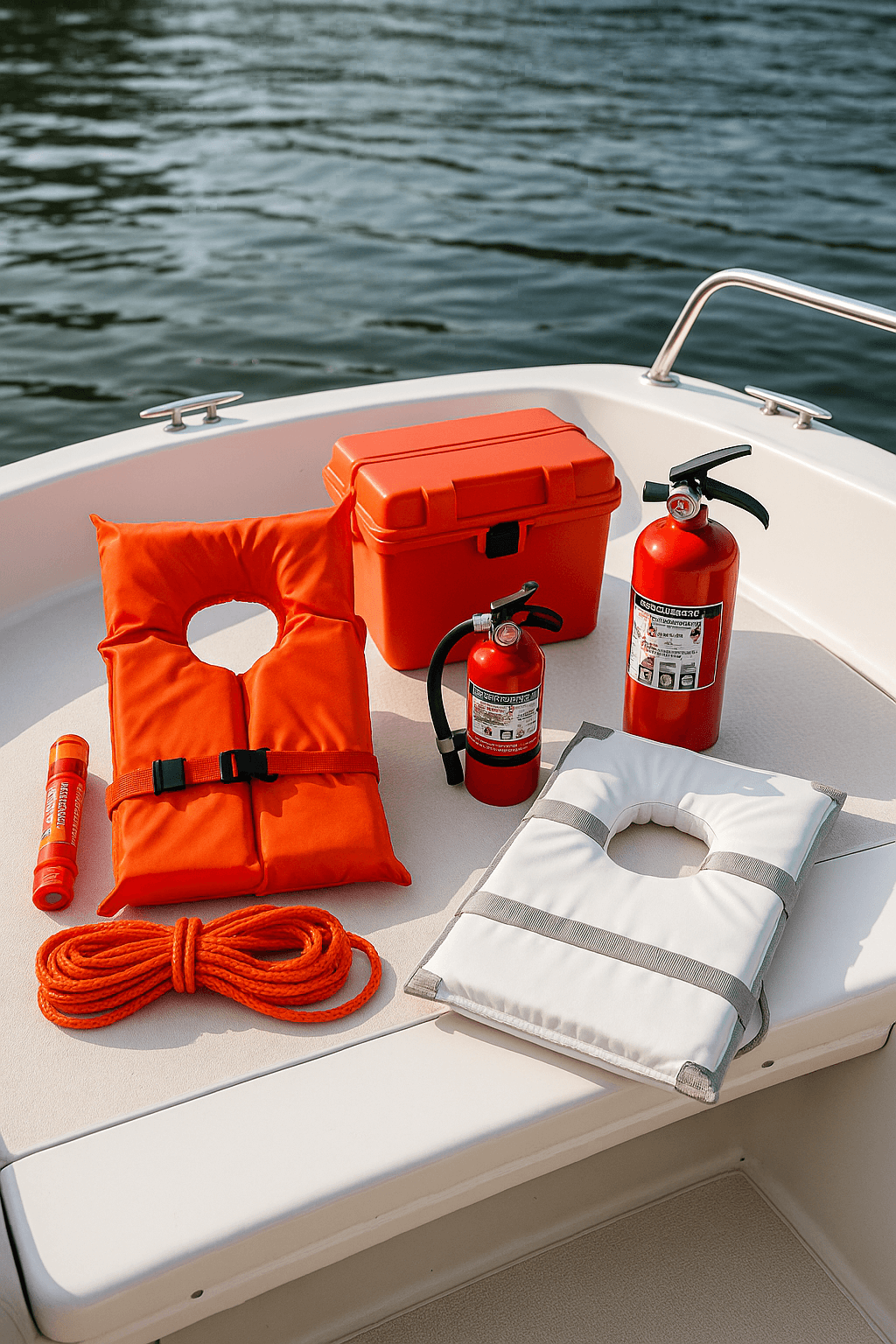
Personal Safety Gear
- Life Jackets: Every person on board needs on that fits properly. Read our Life Jacket Guide for sizing help.
- Throwable Devices: Keep at least one accessible cushion or ring buoy (U.S.C.G. Type IV)
- Engine Kill Switch: Many states now require lanyard-style or electronic kill switches for small craft.
Emergency and Survival Gear
- Fire Extinguishers: Must be marine-rated and easily reachable.
- Visual Distress Signals: Flares or electronic SOS lights help rescuers loate you.
- Sound Signals: A whistle, horn, or bell is essential for communication and compliance.
- VHF Radio: Vital for reaching the Coast Guard or nearby boats in an emergency.
- First Aid Kit: Include motion sickness medication, bandages, and antiseptic.
Navigation & Communication
- GPS or Chartplotter: Know where you are and how to get home safely.
- Marine Compass: Always have a backup for electronic devices.
- Anchor and Line: Secure your boat quickly in an emergency or when waiting for help.
For a deeper look at what's required by law and what's simply smart to have onboard, read our complete guide on Reqired Boat Safety Equipment and ensure your vessel meets U.S. Coast Guard standards.
Safe Boating Practices on the Water
Boating safely isn’t just about rules – it’s about you staying aware and respectful for the environment and other boaters.
Maintain Awareness
- Always have a designated lookup to watch for hazards, swimmers, and other boats.
- Follow posted speed zones and avoid excessive wake near docks or smaller vessel.s
- Keep a safe distance from other boats and watercraft.
Understanding Navigation Rules
- Knowing “who has the right of way” prevents confusion – and collisions.
- Follow the “Red, Right, Returning” rule when entering a channel.
- Use navigation lights correctly at night or in poor visibility.
- When in doubt, yield to avoid a close call.
Avoid Common Mistakes
- Never boat under the influence – alcohol slows reaction time and impairs judgment.
- Don’t overload your vessel beyond its rated capacity.
- Avoid distractions – stay alert, especially in crowded waterways.
If you're new to boating or refreshing your safety knowledge, check out our post on Boating Safety Tips for Beginners for practical advice and real-world examples of safe navigation, speed control, and situational awareness.
Boating with Family and Pets
Bringing loved ones aboard is one of the best parts of boating – but it adds responsibility.
Kids on Board
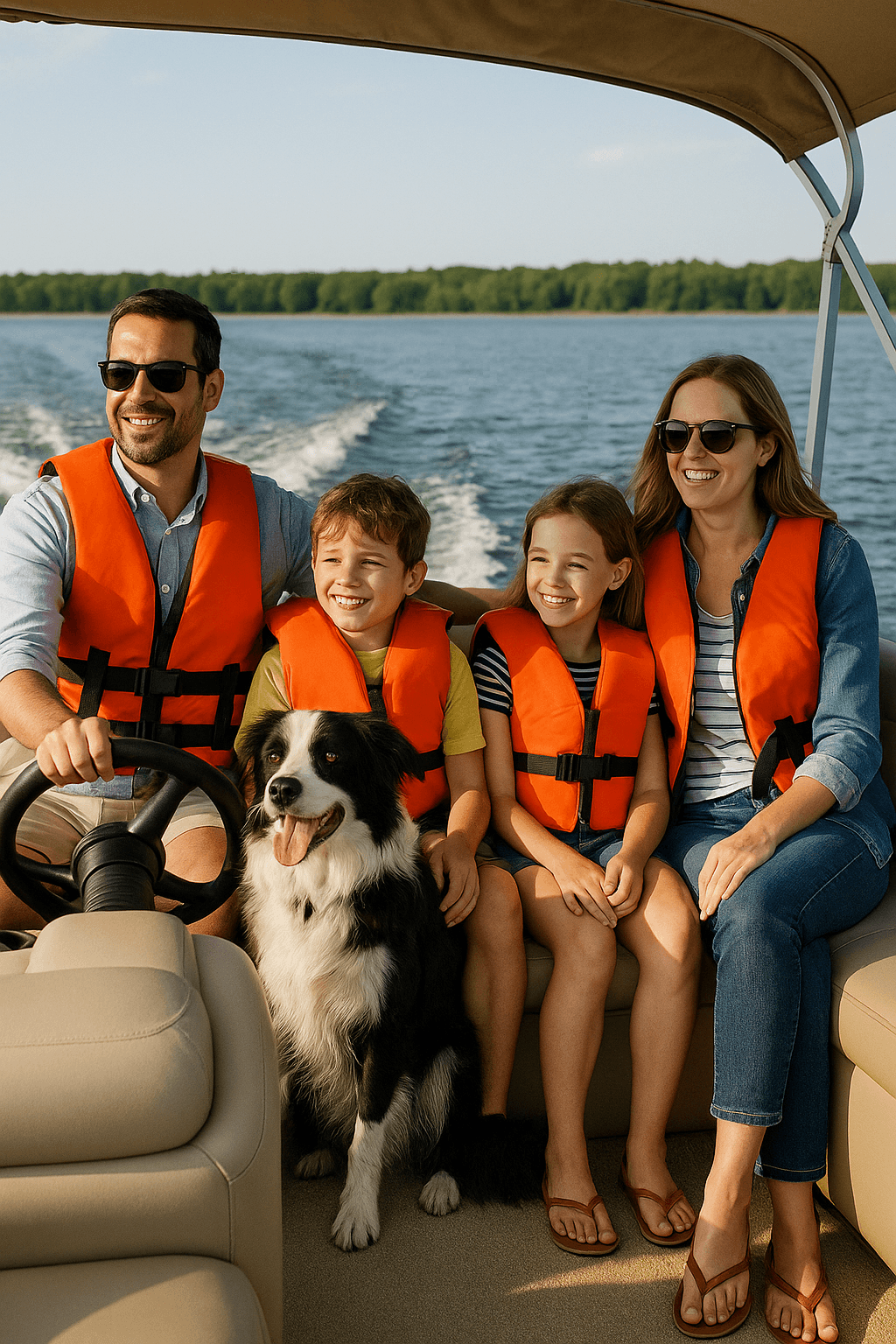
- Children under 13 must wear a U.S. Coast Guard-approved life jacket at all times on deck in most states.
- Choose bright colors and snug fits with head support and crotch straps for small children.
- Teach kids basic boating rules – like keeping hands inside and staying seated while underway.
Pets on the Water
- Fit your dog or cat with a pet life jacket that includes a handle for easy lifting.
- Bring fresh water, a bowl, and a shaded area to prevent overheating.
- Use a non-slip mat on deck to help your pet maintain footing.
Planning to bring your dog aboard? Explore our Pet Life Jackets and keep every member of the family safe - paws included.
Emergency Procedures
Knowing what to do in a crisis can make the difference between a minor incident and a major emergency.
Man Overboard Response
- Shout “Man Overboard!” and point to the person at all times.
- Cut the engine and throw a flotation device immediately.
- Approach from downwind and stop the boat a safe distance away.
- Use a ladder, rope, or boarding device to help them back aboard.
Engine Failure
- Drop anchor to prevent drifting into danger
- Use your VHF radio to hail TowBoatUS or the Coast Guard.
- Display an orange distress flag or signal for help.
Fire or Collision
- Cut the fuel supply if possible.
- Use your extinguisher from a safe position.
- If the fire spreads, abandon ship using flotation devices and move upwind.
Seasonal and Environmental Safety
Every season brings different challenges.
- In cold weather, wear layered clothing and always keep a change of dry gear on board.
- In hot weather, wear UV-protective clothing and apply sunscreen regularly.
- Dispose of oil, fuel, and trash responsibly – protecting the waterways keeps everyone safer.
- Check local rules for no-wake zones and restricted areas to avoid fines or accidents.
Boat Education and Certification
Education is one of the best investments a boater can make.
Take a NASBLA-approved safety course – many are available online and may lower your insurance premium.
The U.S. Coast Guard Auxiliary and BoatUS Foundation both offer recognized programs.
Even seasoned boaters benefit from refresher courses that cover new laws, technologies, and environmental best practices.
Stay Safe and Prepared on the Water
That's boat safety 101 - simple steps that make every trip safer. Remember, every great boating trip starts with planning and ends with everyone home safe.
With the right habits, the right gear, and a little awareness, you can make safety second nature – without taking away from the fun.
At Wholesale Marine we’re here to help you boat smart and stay protected.
Frequently Asked Questions About Boat Safety
What safety equipment is required on a boat?
Every boat must carry a Coast Guard-approved life jacket for each person onboard, plus at least one throwable flotation device. You’ll also need a fire extinguisher, sound-producing device (like a horn or whistle), navigation lights, and visual distress signals. Requirements vary by boat size and waterway, so always confirm with the U.S. Coast Guard’s current regulations.
What are the most important boating safety tips?
Always wear a life jacket, keep an eye on the weather, avoid alcohol while operating a boat, and assign someone to watch for hazards. Safe boating starts with awareness and preparation – even experienced boaters can get caught off guard.
Do I need a boating license or safety certificate?
Many states require boaters to complete a certified safety course. The U.S. Coast Guard Auxiliary and Boat US Foundation offer approved online programs. Completing one not only makes you safer but can also lower your insurance rates.
What should I do if someone falls overboard?
Cut the engine immediately, throw a flotation device, and keep your eyes on the person in the water. Approach from downwind and bring them aboard carefully using a ladder or rope. Quick action and clear communication make all the difference.
How can I keep my family and pets safe while boating?
Everyone – including kids and pets – should wear a properly fitted life jacket. Bring shade, water, and sunscreen, and teach kids to stay seated while the boat is moving. For dogs, choose a life jacket with a handle to make lifting easier.