
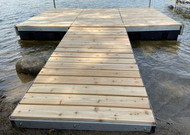
Whether you’re building a lakefront retreat, upgrading your marina, or simply want a better way to launch your kayak, a floating dock is a smart, versatile solution. These docks adjust with changing water levels, are easy to install, and can be configured to suit any shoreline.
In this guide, we’ll explain what floating docks are, the different types available, how to choose the right one, and even answer common questions like “how to build a floating dock” and “how do you anchor a floating dock.”
When you’re ready to get started, explore Floating Dock Kits and accessories from top brands at Wholesale Marine.
What Is a Floating Dock?
A floating dock is a modular platform that rests on buoyant floats or pontoons, allowing it to rise and fall with the water level. Unlike stationary docks (which are mounted on fixed posts) or roll-in docks (which are moved seasonally), floating docks are ideal for lakes, rivers, ponds, or tidal areas where the water fluctuates.
These docks are available in complete floating dock kits, or they can be built from scratch using modular floats, decking, and anchoring systems.
Benefits of Floating Docks
Choosing a floating dock offers several key advantages:
- Adapts to Water Level Changes: Perfect for fluctuating lakes, rivers, and reservoirs
- Simple Installation: Modular designs make setup fast and straightforward
- Low Maintenance: Materials like poly-composite and aluminum resist rot, rust, and UV damage.
- Versatile and Expandable: Add sections, corners, or swim platforms as needed.
- Portable and Reusable: Can be relocated or stored for winter if desired.
Pro Tip: If you experience wide seasonal water variation, a floating dock provides the flexibility a stationary dock can’t.
Types of Floating Docks
Not all floating docks are created equal. The right choice depends on your intended use, environment, and maintenance preferences.
Poly-composite Floating Docks
Durable, slip-resistant, and low-maintenance. Made from high-density plastic, these docks are ideal for residential or recreational use. Their modular design makes them easy to expand.
Aluminum Floating Docks
Lightweight yet strong, aluminum floating docks are corrosion-resistant and designed for long-term durability. Their clean, modern look makes them popular for both marinas and private docks.
Modular Floating Docks
A modular floating dock system lets you create any configuration – from simple walkways to full U-shaped or T-shaped platforms. Great for commercial setups or high-traffic docks.
Floating Docks for Ponds
If you’re installing a dock in a pond, a floating pond dock is an excellent choice. Lightweight and easy to anchor, these docks provide stables access for swimming, fishing, or launching small boats.
How to Choose the Right Floating Dock
When selecting the best floating dock or kit, consider the following factors:
- Water Conditions: Calm vs. rough water, current strength, depth.
- Purpose: Will you use it for swimming, boat access, or storage?
- Material Preference: Aluminum, poly-composite, or wood decking each offer unique benefits.
- Dock Size & Configuration: Think about future expansion or accessories like ladders or bumpers
- Anchoring Method: Choose an anchoring system suitable for your shoreline and bottom type
How to Build a Floating Dock (DIY Overview)
Many boat owners choose to build their own floating dock using modular floats and decking materials. Here’s a simplified overview:
- Plan Your Layout: Determine dock size and configuration
- Choose Floats or Pontoons: Select durable polyethylene or foam-filled floats for buoyancy.
- Frame the Dock: Use treated lumber or aluminum framing for strength.
- Attach Decking: Install decking panels (cedar, composite, or aluminum).
- Anchor the Dock: Secure using cables, pipes, or anchor chains depending on water depth and conditions.
If you prefer a ready-to-install option, shop floating dock kits that include all necessary components for easy assembly.
How Do You Anchor a Floating Dock?
A properly anchored floating dock stays secure and level even in fluctuating water levels, waves, or windy conditions. The best anchoring method depends on your water depth, bottom type, and local conditions. Here’s a breakdown of the most common anchoring systems and what each entails:
Cable Anchoring Systems
Cable anchors use heavy-duty steel cables or chains attached to concrete weights or anchor blocks resting on the lake or river bottom.
- Ideal for deep water or areas with fluctuating levels where traditional posts aren’t practical.
- The cables are attached to the dock with adjustable winches or turnbuckles, allowing you to tighten or loosen them as water rises or falls.
- This system provides flexibility and stability, letting your dock move naturally with the current while staying secure.
Tip: For the best results, use galvanized or stainless-steel cable and inspect it seasonally for wear.
Post or Pole Anchors
Post anchors (sometimes called pile anchors) use vertical metal or PVC poles driven into the lakebed that pass through sleeves or guides on the dock.
- Best for shallow lakes, calm ponds, or protected coves.
- The dock can slide up and down along the poles as the water level changes.
- Installation is relatively simple and provides excellent lateral stability with minimal movement.
This option is especially common for floating pond docks or residential waterfronts where ease of access and low maintenance are priorities.
Concrete Block or Deadweight Anchors
Concrete block (or “deadweight”) anchors rely on heavy concrete or steel weights connected to the dock via chains or cables.
- Designed for high-current areas, open water, or windy shorelines where extra holding power is needed.
- These anchors rest on the bottom and hold the dock in position through pure weight and tension.
- They are often paired with flexible couplings to reduce stress on the dock during wave motion.
- Deadweight systems work best in deeper water where the bottom composition prevents driving poles.
Spud or Pipe Anchors
A spud anchoring system uses long, hollow steel pipes that slide through sleeves attached to the dock’s frame.
Common for commercial floating docks or areas with soft, muddy bottoms.
- The spuds are manually or hydraulically lowered into the lakebed to pin the dock in place.
- This method allows for vertical movement with waves and water level changes while minimizing drift.
- Though more complex, spud anchors are extremely secure for heavy-duty or industrial dock setups.
Auger Anchors
For smaller docks or lightweight floating dock kits, auger-style anchors (essentially large screw anchors) can be twisted into the lakebed and connected with rope or cable.
- Ideal for calm, shallow water and recreational setups like floating kayak docks.
- Easy to install and remove seasonally.
- Best used in soft, sandy, or muddy bottoms where the auger can grip securely.
No matter which system you choose, always ensure your anchor lines are tensioned correctly and inspected regularly. Proper anchoring extends your dock’s lifespan and prevents costly damage.
Frequently Asked Questions About Floating Docks
How long do floating docks last?
High-quality floating docks can last 20-30 years with proper maintenance, depending on materials and water conditions
Can you leave a floating dock in the water year-round?
In mild climates, yes. In areas that freeze, it’s best to remove or reposition your dock to prevent ice damage.
How do you anchor a floating dock?
Use cable, post, or block anchors depending on your water depth, current, and bottom conditions.
What is the best material for a floating dock?
Aluminum and poly-composite docks offer the best combination of strength, durability, and low maintenance.