
 |
Spark Plug Wires Choose Your Manufacturer |
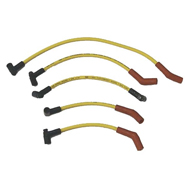 |











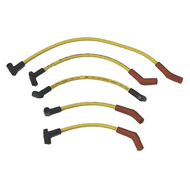
Marine Spark Plug Wires
Marine spark plug wires carry high-voltage ignition energy from the distributor, ignition coil, or coil pack to the spark plugs. Correctly matched wires help deliver consistent spark while protecting the conductor from heat, moisture, vibration, abrasion, and contamination in the engine compartment.
Wholesale Marine carries individual boat spark plug wires and complete marine spark plug wire sets for popular outboard, inboard, and sterndrive engines. Choose your engine manufacturer above to shop compatible ignition components.
Choosing a Marine Spark Plug Wire Set
Marine engine spark plug wires are application-specific. The correct set depends on more than the number of cylinders or wire diameter. Wires must have the appropriate lengths, terminals, boots, conductor construction, resistance or suppression characteristics, and routing for the engine and ignition system.
Before ordering a replacement marine spark plug wire set, verify:
- Engine manufacturer
- Engine model and displacement
- Model year or production range
- Engine serial or model number
- Number of cylinders
- Distributor, coil-pack, or other ignition-system design
- Conventional, electronic, HEI, Thunderbolt, or other specified ignition type
- Wire length and required routing
- Spark-plug, distributor, and coil terminal styles
- Boot angle and configuration
- Original equipment or replacement part number
Do not select a marine ignition wire set based only on engine displacement or appearance. Engines with the same displacement may use different distributors, coils, terminals, routing, and wire lengths.
Marine vs. Automotive Spark Plug Wires
Some marine and automotive engines share a common base design, but that does not make every spark plug wire set interchangeable. Marine applications may require different wire lengths, routing, boots, terminals, conductor construction, suppression characteristics, and protection against heat, moisture, and corrosion.
Many inboard and sterndrive wire sets are tailored to route around marine exhaust components and reach the correct cylinder without contacting hot surfaces or moving parts. Outboard spark plug wires may use application-specific coil connections, screw-in or push-in terminals, boots, and individual lead lengths.
Use a wire set specifically listed for the engine and ignition system rather than substituting a set based only on cylinder count or physical similarity.
Signs of Worn Boat Spark Plug Wires
Possible signs of damaged or deteriorated boat spark plug wires include:
- Hard starting or failure to start
- Engine misfiring or running unevenly
- Rough or inconsistent idle
- Hesitation during acceleration
- Reduced engine power
- Intermittent performance in damp conditions
- Visible cracking, burning, swelling, or abrasion
- Loose, corroded, or damaged terminals
- Torn or hardened spark-plug and distributor boots
- Evidence of electrical arcing
These symptoms do not automatically confirm a wire failure. Worn spark plugs, damaged coils, distributor-cap or rotor problems, incorrect ignition timing, fuel-delivery issues, poor compression, or other engine faults can produce similar symptoms.
Inspecting Marine Ignition Wires
Inspect spark plug wires with the engine off and cool. Examine the complete length of each wire, paying particular attention to areas near exhaust components, brackets, clamps, and sharp edges.
- Check the outer jacket for cracks, burns, cuts, swelling, or abrasion.
- Inspect boots for tearing, hardening, contamination, and heat damage.
- Check terminals for looseness, corrosion, or separation from the conductor.
- Confirm that each wire is fully seated at both ends.
- Verify that wires are routed through the proper separators and retainers.
- Keep wires away from hot exhaust surfaces and moving components.
- Compare resistance readings only with the manufacturer’s specifications.
Wire resistance can vary with conductor design and lead length, so there is no universal resistance value that identifies every good or bad marine spark plug wire.
Installing Replacement Marine Spark Plug Wires
Incorrect firing order or routing can prevent an engine from running properly. Follow the engine manufacturer’s wiring diagram and installation procedures.
- Allow the engine and exhaust system to cool completely.
- Photograph the existing firing order and wire routing before removal.
- Replace one wire at a time when practical.
- Match each replacement wire to the correct cylinder and connection.
- Push on the boot rather than pulling or forcing the wire itself.
- Confirm that each terminal is fully seated and securely connected.
- Use the original separators, retainers, and routing paths.
- Prevent wires from resting against exhaust manifolds or sharp edges.
- Apply dielectric grease only where and as directed by the manufacturer.
- Verify the firing order before starting the engine.
If you do not have the correct wiring diagram or are uncertain about the ignition system, have the work completed by a qualified marine technician.
Shop Marine Spark Plug Wire Sets
Wholesale Marine carries replacement marine spark plug wires for Chris-Craft, Chrysler Inboard, Crusader, Evinrude, Indmar, Johnson, MerCruiser, Mercury, OMC, PleasureCraft, and Volvo Penta engines. Our selection includes complete wire sets and ignition components from trusted brands such as Sierra Marine.
Choose your engine manufacturer above or use our Engine Parts Finder to help narrow your search. If you need assistance, call our customer-service team at 877-388-2628 with your engine manufacturer, model, displacement, year, serial number, and ignition-system information available.
Marine Spark Plug Wire FAQs
Are marine and automotive spark plug wires interchangeable?
Not automatically. Marine applications may require different wire lengths, terminals, boots, conductor construction, suppression characteristics, and routing. Use a spark plug wire set specifically listed for the engine and ignition system.
What are the signs of bad marine spark plug wires?
Possible signs include hard starting, misfiring, rough idle, hesitation, reduced power, intermittent operation in damp conditions, visible jacket damage, corroded terminals, or evidence of electrical arcing. Other ignition, fuel, and engine problems can cause similar symptoms.
How do I test marine spark plug wires?
Begin with a visual inspection of the jackets, boots, terminals, routing, and connections. Resistance testing may also be appropriate, but readings must be compared with the specifications for the wire design and length. There is no single resistance value for every marine wire.
When should boat spark plug wires be replaced?
Follow the engine manufacturer’s inspection and replacement guidance. Replace wires that are cracked, burned, abraded, swollen, corroded, electrically damaged, or unable to meet the specified test requirements.
Should all spark plug wires be replaced together?
When an engine uses a matched wire set and the wires have similar age and exposure, replacing the complete set can provide consistent construction and condition across all cylinders. Follow the engine manufacturer’s service recommendations.
Does spark plug wire diameter determine fitment?
No. Diameter is only one characteristic. Correct fitment also depends on wire length, conductor design, resistance or suppression requirements, terminals, boots, ignition system, cylinder count, and routing.
How do I find the correct marine spark plug wire set?
Match the set using the engine manufacturer, model, displacement, year, serial number, number of cylinders, ignition-system type, wire routing, terminal styles, and original part number. Do not select a set using cylinder count alone.