
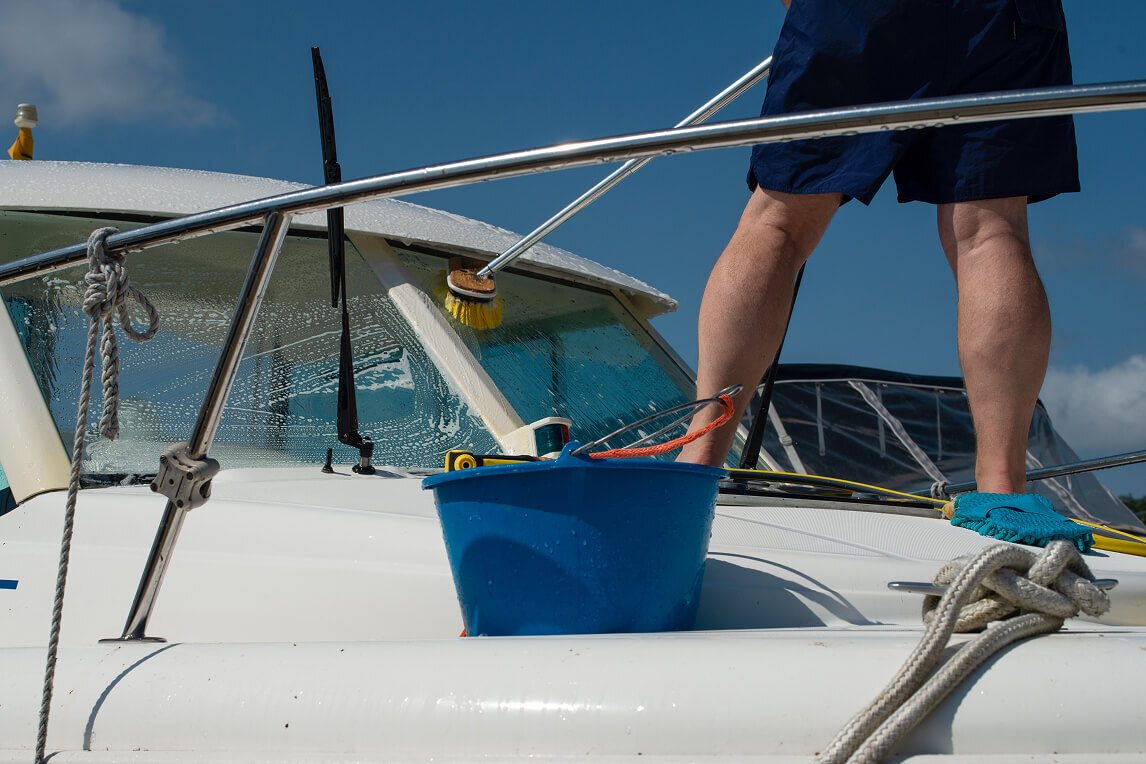
Cleaning a boat feels a lot easier when you know which products to use and how each surface reacts to water, soap, and sun. With the right approach, you can lift grime, brighten faded spots, and keep your boat looking ready for the next trip. Wholesale Marine stocks all the boat cleaning supplies you’ll want on hand, which makes learning how to clean your boat simple once you know the steps.
Article Contents:
Essential Boat Cleaning Supplies You’ll Want on Hand
Getting set up with the right gear makes cleaning a boat feel a lot less tedious. Marine surfaces take a beating from salt, sun, and constant moisture, so choosing products built for boats keeps things from wearing out early. Most boaters keep a small kit ready to go, and Wholesale Marine makes it easy to grab everything in one spot.
- Marine boat wash that won’t strip wax
- Soft brushes for gelcoat and painted surfaces
- Stiff brushes for non-skid texture
- Buffers and pads for streak-free, shining finishes
- Vinyl cleaner and protectant for protection against yellowing, cracking, and UV damage
- Hull cleaner for stains and scum lines
- Boat wax or polymer protectant for fiberglass, metal, and painted surfaces
- Mold and mildew cleaners to prevent musty odors, stains, and corrosion
Getting Started: Prep Before Any Deep Cleaning
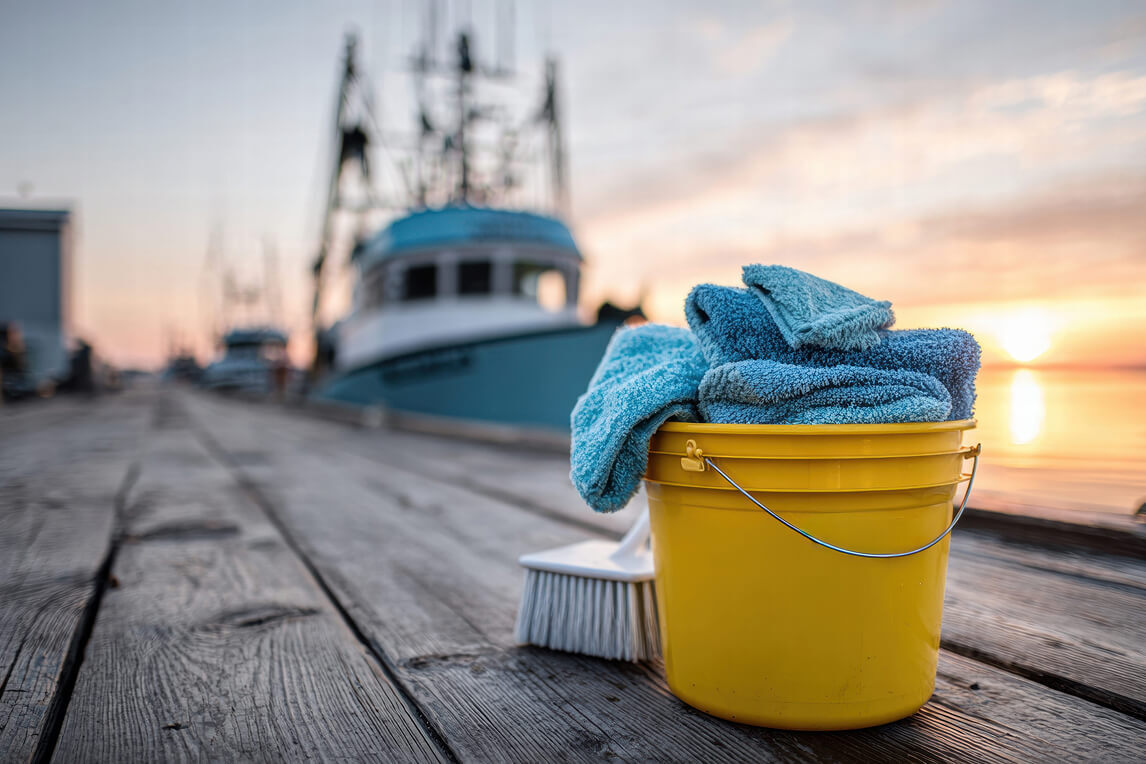
A good wash begins with simple prep that saves you time later. Clear out loose gear, remove cushions you don’t want soaked, and get a clear view of every surface you plan to clean. Once the deck is open, give the entire boat a full rinse with fresh water to knock away salt, sand, and loose debris.
Work in small areas instead of tackling everything at once. This helps soap stay active and makes each part easier to scrub. A quick look at seams, hardware, and hatches also tells you if anything needs maintenance before you begin cleaning your boat in detail.
Cleaning the Hull: Soap, Scrub, Shine
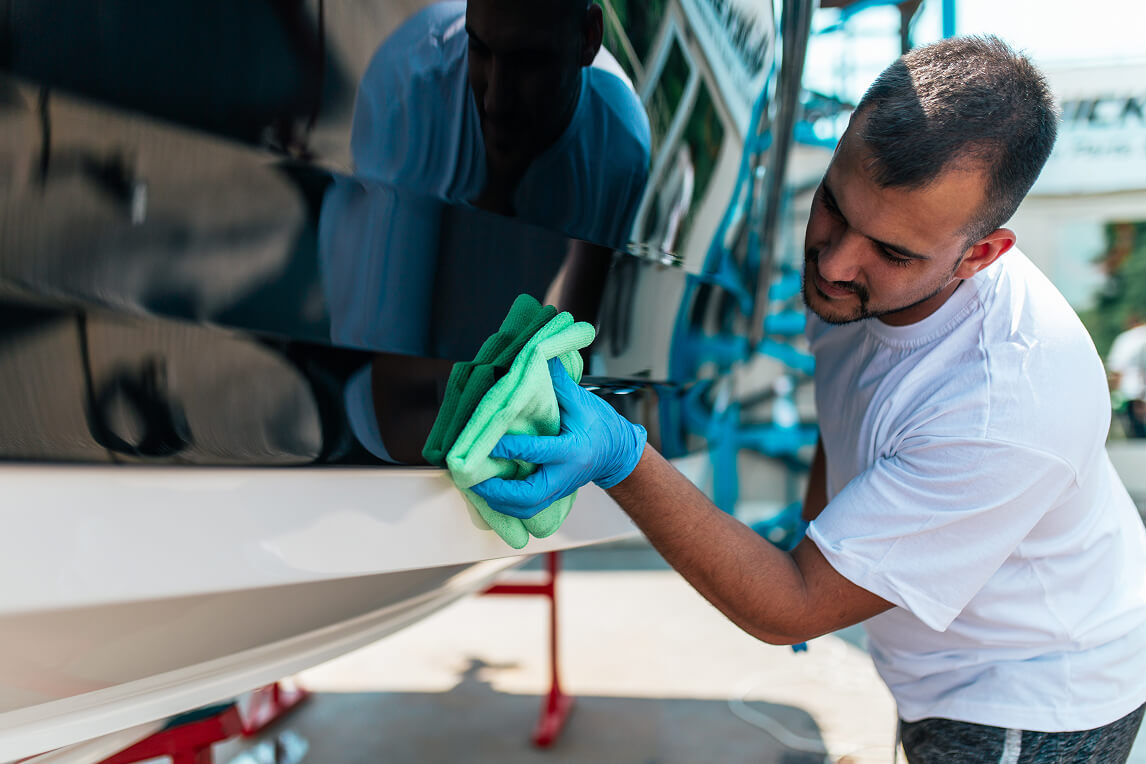
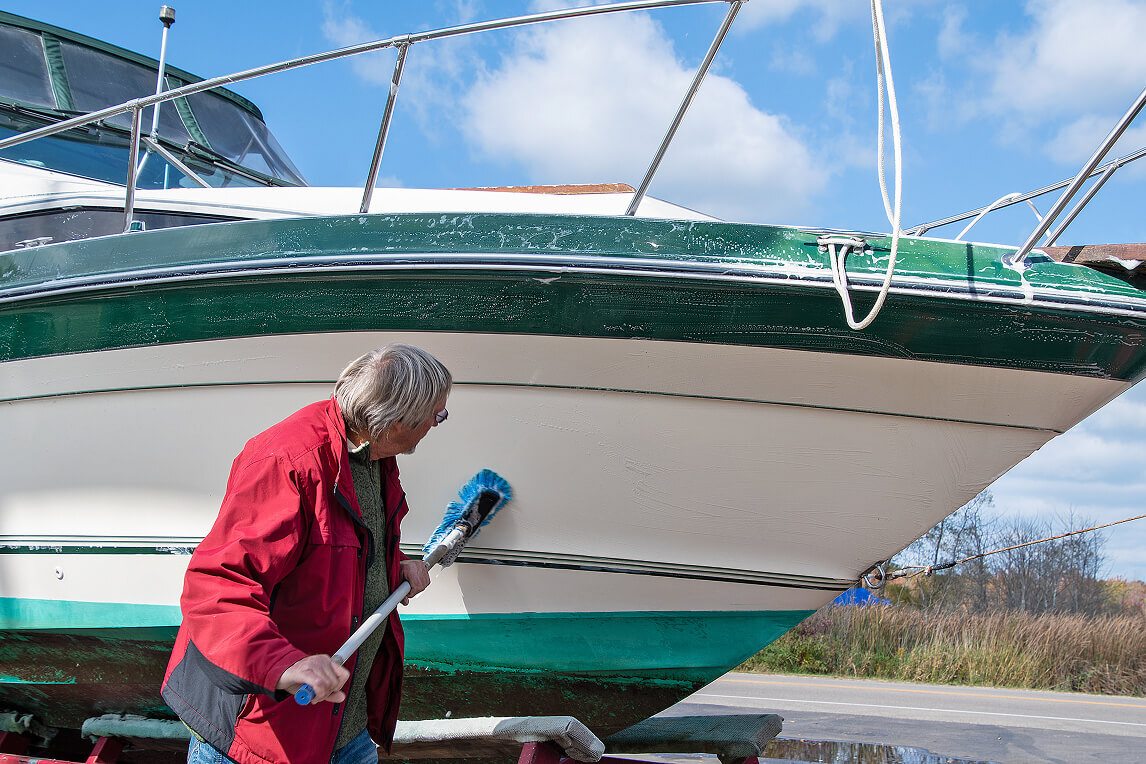
The hull carries the most visible signs of use, so learning how to clean a boat hull the right way keeps the entire vessel looking sharp. Marine soap is your first move. It lifts grime without stripping the protective coat you worked hard to apply. A slow rinse, gentle scrub, and steady approach help you refresh the surface without causing swirl marks or dull spots.
Start with these steps:
- Rinse the hull from top to bottom so loose grime falls away before you begin scrubbing.
- Mix marine soap in a clean bucket and work in small sections to keep the soap active.
- Use a soft brush or wash mitt for gelcoat and painted surfaces, applying light pressure.
- For stubborn scum lines or waterline stains, use a hull cleaner designed for fiberglass or aluminum.
- Rinse each section as soon as you finish scrubbing so soap never dries on the surface.
- Once the hull is clean and dry, apply wax or a polymer protectant to help the shine last longer.
This method keeps the hull bright and smooth while protecting it from UV wear and water intrusion.
Deck Care and Non-Skid Surfaces
Decks collect everything from sunscreen residue to fish scales, so giving them focused attention keeps the boat safe and comfortable. Non-skid surfaces need cleaners that lift grime without making things slippery, so the right brush makes a noticeable difference in how much elbow grease you need. When you take your time with the deck, the rest of the cleaning session feels smoother.
Follow this simple approach:
- Start with a full rinse to clear sand and loosen dried salt.
- Use a non-skid safe deck cleaner and a stiff brush to reach the texture in the surface.
- Scrub in overlapping passes so the cleaner reaches every groove.
- Rinse thoroughly to make sure no soap residue stays behind.
- Give metal rails, hinges, and hardware a quick wipe with an all-purpose marine cleaner.
Keeping the deck clean prevents stains from settling into the texture and helps maintain proper footing when the boat gets wet.
Upholstery, Vinyl Seating, Canvas, and Clear Panels
Soft surfaces change the way your boat feels, so giving them the right attention keeps everything comfortable and looking sharp. Vinyl, canvas, and clear panels react differently to sun and moisture, which makes surface-specific cleaners the smartest choice. Once you learn how to clean your boat’s softer materials, upkeep becomes quick and predictable.
Here’s a practical routine:
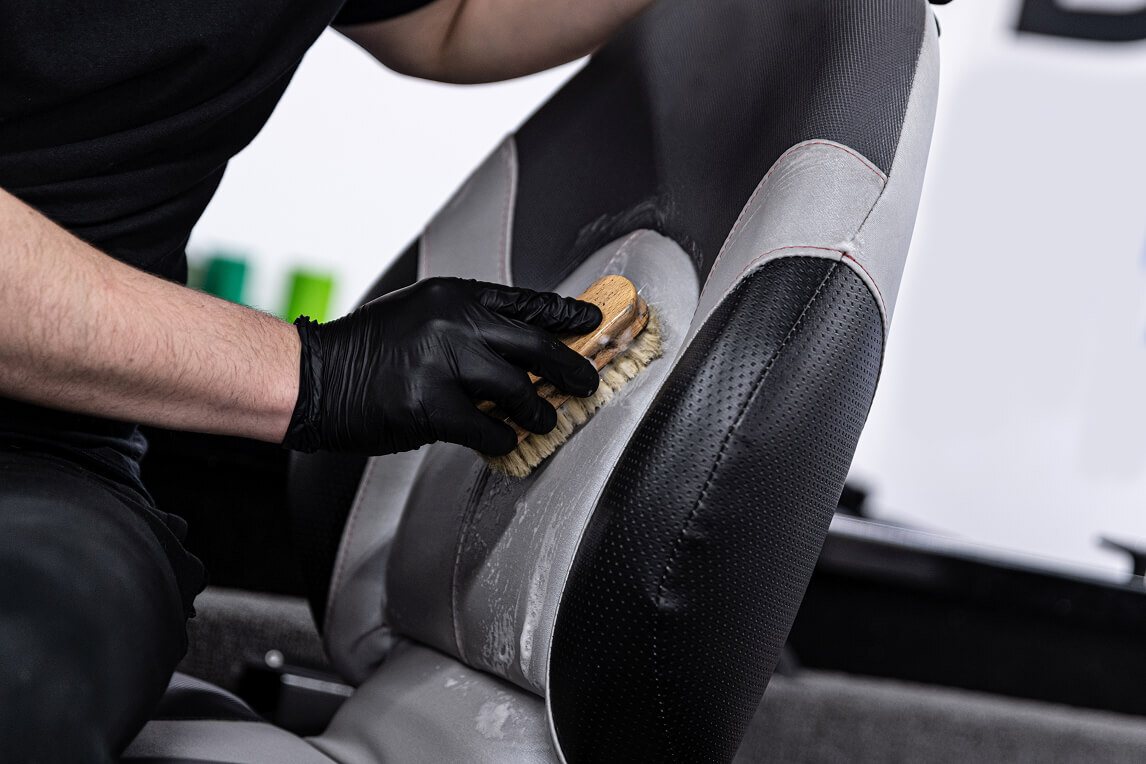
- Rinse vinyl seating with fresh water, then use a marine vinyl cleaner to lift grime without harming the surface.
- Wipe in small circles with a soft cloth, paying attention to seams where dirt settles.
- Add a vinyl protectant once everything is dry to help guard against UV fading.
- Clean canvas covers with a soft brush and canvas cleaner, then rinse thoroughly so no residue attracts dirt.
- Treat clear panels with a cleaner made for isinglass or similar materials to avoid scratches.
- Dry everything completely before reinstalling cushions or covers to prevent mildew.
A little care here keeps your seating soft, your covers strong, and your clear panels bright enough to enjoy the view on every outing.
Inside the Boat: Carpets, Compartments, and the Bilge
Interior areas collect moisture, sand, and stray debris faster than most people expect. A steady routine keeps these hidden zones fresh and prevents mildew from settling in. Interior cleaning feels easier when you use boat cleaning supplies made for enclosed or fabric-lined spaces, especially ones that handle moisture without leaving behind strong residue.
Use this workflow to keep things in good shape:
- Vacuum or sweep carpets to remove loose dirt before applying any cleaner.
- Spot-clean stains with a marine carpet cleaner and blot instead of rubbing.
- Wipe storage compartments with an all-purpose marine cleaner, focusing on corners where moisture hides.
- Air out compartments before closing them so they stay dry between trips.
- Clean the bilge with a bilge-safe cleaner, rinse with fresh water, and let it drain fully.
- Inspect for damp spots or odors so you can catch mildew early.
This simple approach keeps interior spaces fresh and helps extend the life of carpets, liners, and storage areas.
Cleaning Engines and Trailers
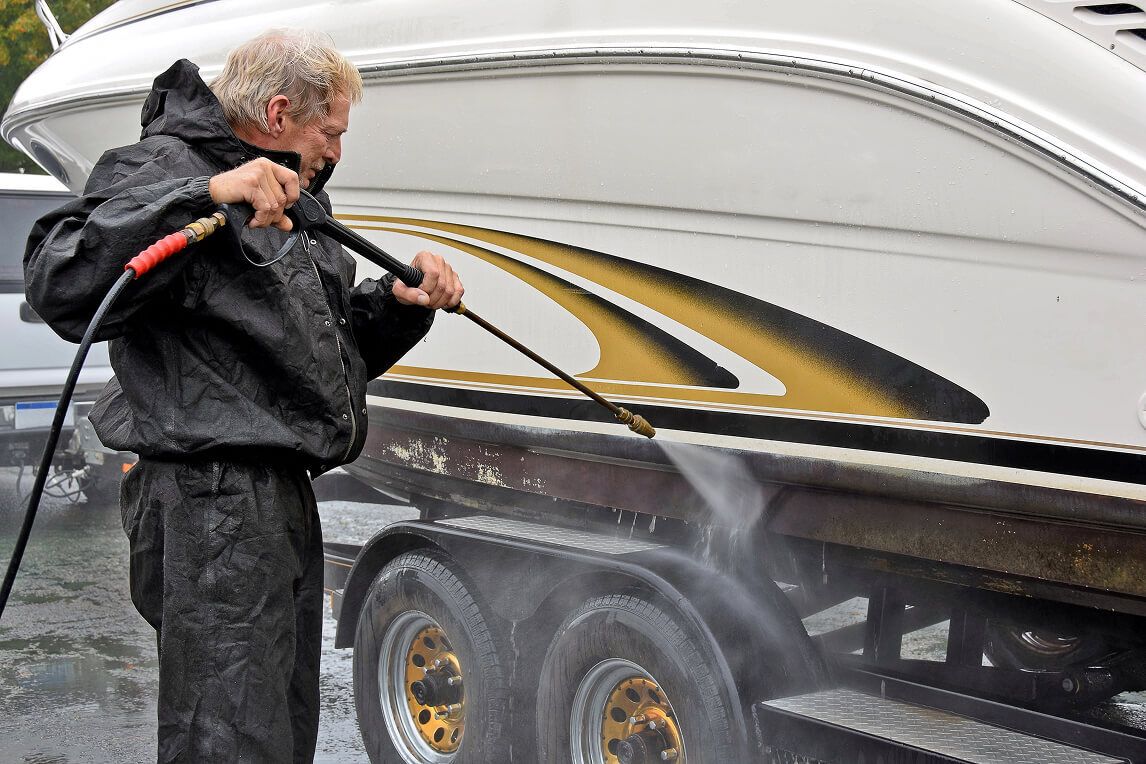
Engines and trailers may not be the star of the show, but keeping them clean helps everything run smoother and last longer. A steady rinse and gentle wipe-down go a long way, especially when the goal is to clear salt and grime without forcing water into sensitive areas. Cleaning a boat often means paying attention to the parts that support it, and engines and trailers fall right into that category.
Here’s an easy process to follow:
- Rinse the engine cowling and any exposed metal with fresh water, keeping the spray light around electrical connections.
- Use a mild marine-safe cleaner on metal surfaces and wipe with a soft cloth to remove buildup.
- Check for corrosion, loose fittings, or cracked hoses as you clean, since grime often hides problem spots.
- Wash the trailer frame, bunks, wheels, and fenders with marine soap and a brush to loosen road film.
- Give lights, winches, and tie-down points a quick inspection once everything is clean and dry.
Staying consistent here keeps the mechanical side of boating predictable and helps you catch maintenance issues before they turn into repairs.
Protecting Your Boat After the Wash
Once every surface is clean, adding protection helps your work last longer. Finishing a wash with waxes, sealants, and UV protectants cuts down on future buildup and helps your boat stay bright through long days in the sun. This step often feels the most rewarding because you see the shine come back as each product sets.
Here’s how to wrap things up:
- Apply a marine wax or polymer protectant to the hull once it’s fully dry for added gloss and surface protection.
- Treat vinyl seats with a UV protectant to help prevent fading and cracking.
- Use a canvas or fabric protectant on covers and bimini tops to keep them from absorbing grime.
- Wipe down metal hardware with a corrosion-resistant spray for extra longevity.
- Let everything air-dry before putting cushions back or closing compartments.
- Store the boat with clean, dry covers when possible to reduce dust and moisture.
By protecting surfaces after each wash, you make every future wash easier and keep your boat looking its best throughout the season.
Boat Cleaning Tips for Faster, Easier Maintenance
A little routine goes a long way in keeping the cleaning process smooth. Once you get comfortable with how to clean your boat step by step, you can cut down on time and effort by doing small upkeep tasks after each trip. These habits help your boat stay bright, reduce stubborn buildup, and keep those bigger cleaning days simple.
Try adding these habits to your routine:
- Give the boat a quick rinse after each outing to wash away salt and grime before they dry.
- Keep a small stash of boat cleaning supplies on board so you can handle spills or stains right away.
- Plan a monthly wash where you check the hull, deck, and seating for signs of wear.
- Schedule a deeper cleaning at the start and end of each season.
- Inspect covers, rails, hardware, and compartments regularly so you notice trouble spots early.
- Air out the interior for a few minutes when you dock to prevent trapped moisture.
Small steps like these make cleaning a boat feel less like a chore and more like simple upkeep that keeps your vessel ready for the next day on the water.
Shop Boat Cleaning Products From Wholesale Marine Today
When you’re learning how to clean a boat, having the right gear at your side makes the whole process smoother. That's why Wholesale Marine keeps things easy by stocking everything you need in one place. Instead of bouncing between stores trying to track down hull cleaners, vinyl sprays, deck soaps, and polishing products, you can grab them all from a single trusted source. Pick up a few essentials, set aside some time, and watch your boat regain that fresh, ready-for-the-water look.
Shop All Boat Cleaning SuppliesFrequently Asked Questions About the Best Way to Clean a Boat
How often should I clean my boat?
A quick rinse after each outing keeps salt and grime from sticking, which saves you time during deeper cleanings. Most boaters do a full wash once a month and a seasonal deep clean at the start and end of the year. Staying consistent helps protect gelcoat, vinyl, and hardware, and it keeps the boat looking sharp all season.
What is the best method for removing stubborn stains from a boat's surface?
Stubborn stains usually respond well to a marine hull cleaner or a stain-specific formula designed for fiberglass or aluminum. Rinse the area, apply the cleaner, let it sit for the recommended time, and scrub with a soft brush. Avoid harsh abrasives since they can dull the finish. Marine-grade products work fast and help you avoid unnecessary damage.
Can I use household cleaning products for boat cleaning?
No. Household cleaners often contain ingredients that strip wax, fade vinyl, or leave residue that attracts even more dirt. Marine cleaning products are made for gelcoat, vinyl seating, canvas, and non-skid surfaces, so they clean effectively without causing long-term issues. Sticking with boat-safe formulas keeps every surface in better shape and makes your cleaning routine easier.
Related Articles