
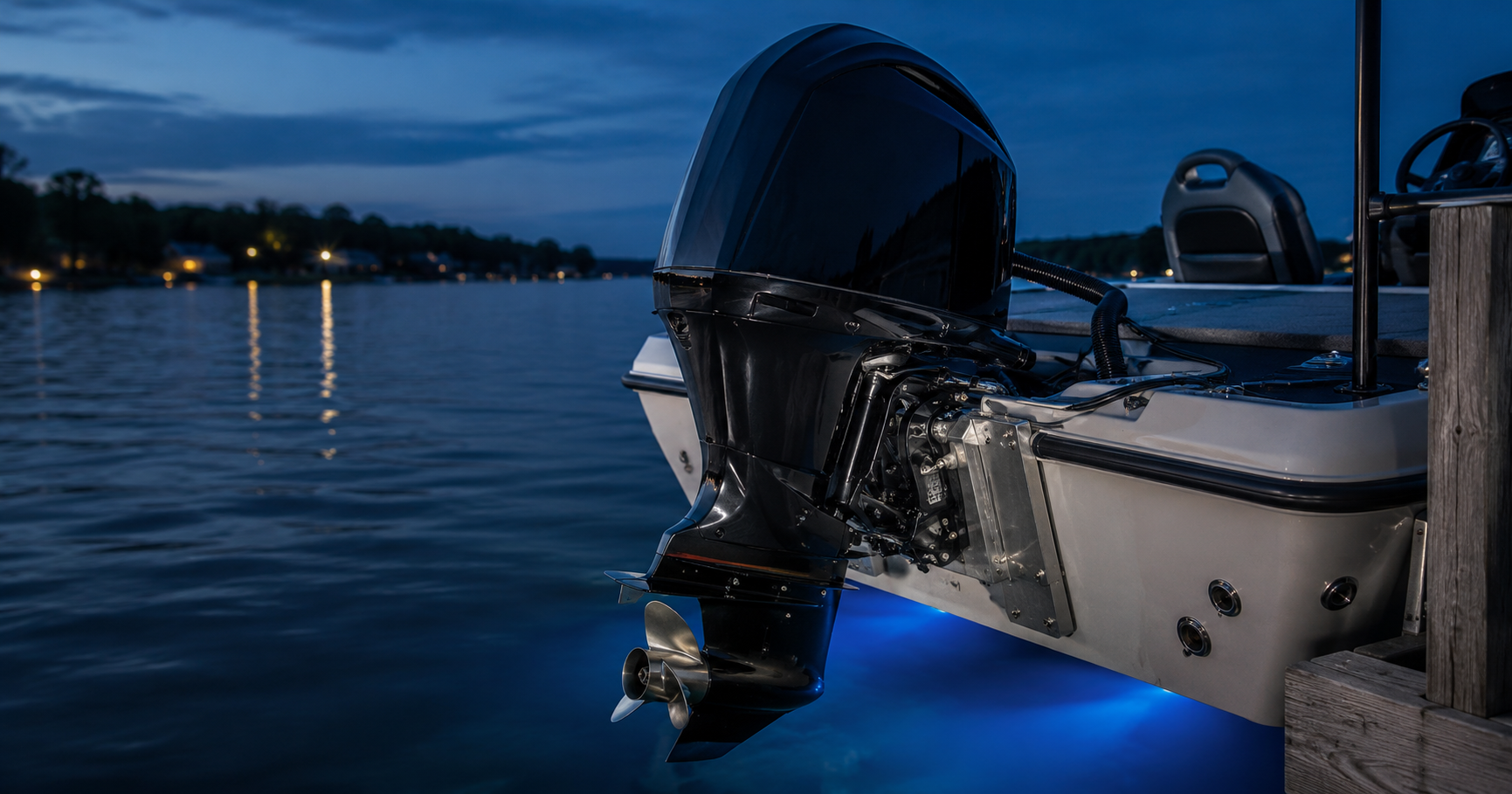
T-H Marine Jack Plates and Boat Accessories
T-H Marine manufactures jack plates, tilt-and-trim systems, motor-mounting accessories, underwater lighting, thru-hull fittings, and other hardware for fishing and recreational boats. These products help boaters adjust outboard mounting height, improve shallow-water capability, complete plumbing installations, and customize lighting around the transom.
Choosing the correct equipment requires more than matching the outboard horsepower. Review the boat and engine manufacturers’ requirements, transom condition, outboard weight, setback, steering clearance, cable length, mounting pattern, and available installation space.
T-H Marine Hydraulic and Manual Jack Plates
A jack plate positions the outboard behind the transom and allows its mounting height to be adjusted. Hydraulic models can be adjusted using an electric-hydraulic system, while manual jack plates are set mechanically and remain at the selected height until readjusted.
T-H Marine ATLAS Hydraulic Jack Plates
ATLAS hydraulic jack plates allow compatible outboards to be raised or lowered electrically, giving boaters convenient engine-height adjustment from the helm.
T-H Marine Z-Lock Manual Jack Plate
The Z-Lock provides an adjustable manual mounting solution for boaters who want outboard setback and engine-height adjustment without an electric-hydraulic system.
Hydraulic Jack Plates vs. Manual Jack Plates
A hydraulic jack plate allows the engine height to be adjusted while boating, subject to the system’s instructions and safe operating limitations. This flexibility can be useful when transitioning between shallow water, normal cruising, and changing load conditions.
A manual jack plate is adjusted with tools and then secured at the selected height. It can provide setback and mounting-height adjustment at a lower level of complexity, but it does not provide the same on-demand control as a hydraulic system.
Neither type should be selected solely by setback dimension. Verify the jack plate’s rated capacity and compatibility with the boat, transom, engine weight, horsepower, steering system, and intended application.
CMC Tilt, Trim, and Motor-Mounting Accessories
T-H Marine’s CMC equipment includes mounting and adjustment solutions for compatible outboards. A tilt-and-trim unit changes engine angle, while a jack plate primarily changes the engine’s vertical mounting position. These functions should not be treated as interchangeable.
CMC PT-35 Hydraulic Tilt and Trim
The CMC PT-35 adds hydraulic tilt-and-trim capability to compatible smaller outboards that do not already have a suitable factory power trim system.
T-H Marine CMC 5-Inch Motor-Mount Vertical Extension
This vertical extension changes the mounting position of a compatible outboard installation when additional height is required. Verify the intended application, dimensions, and mounting requirements before installation.
T-H Marine Underwater LED Lights
Underwater LED lights add illumination around the stern for appearance, nighttime visibility, and dockside use. The appropriate system depends on the desired color and output, hull material, mounting location, operating voltage, wiring route, and available space behind the mounting surface.
Before drilling, inspect both sides of the mounting area and confirm clearance from structural components, fuel equipment, steering hardware, plumbing, and existing wiring. Use marine-grade electrical connections and follow the light manufacturer’s sealing, fuse, wiring, and installation instructions.
Shop underwater LED lighting for compatible transom and hull installations, including options for adding color and illumination beneath the waterline.
T-H Marine Thru-Hull Fittings and Strainers
Thru-hull fittings provide a passage through the hull or transom for drains, livewells, bilge systems, and other onboard plumbing. Strainers help reduce the entry of weeds and larger debris into compatible water-intake systems.
Select fittings according to the installation location, hose size, hull thickness, fitting material, thread or barb dimensions, and whether the opening is above or below the waterline. The hose should fit securely without being forced onto an incorrect barb size.
Below-waterline installations require particular care because a failed fitting, hose, or connection can allow water into the boat. Use materials and sealants approved for the application, secure hoses correctly, and follow applicable installation and inspection requirements.
Thru-Hull Fittings and Strainers
Find thru-hull fittings, intake components, and strainers for compatible boat plumbing and water-management systems.
How to Choose a Jack Plate
Begin with the boat and outboard manufacturers’ recommendations. Confirm that the transom is structurally sound and approved for the additional setback, engine weight, and loading created by the installation.
Setback is the distance the outboard is positioned behind the transom. Additional setback can change engine clearance, water flow, weight distribution, steering geometry, and leverage on the transom. More setback is not automatically better for every boat.
Check steering components, rigging hoses, control cables, electrical cables, splashwell clearance, transom accessories, and the engine’s full steering and tilt range. Existing cables or hoses may not be long enough after the engine is moved rearward.
After installation, confirm all fasteners are tightened according to the equipment instructions and inspect the system regularly for movement, corrosion, leaks, damaged wiring, or loose hardware.
T-H Marine FAQs
What does a jack plate do on a boat?
A jack plate mounts between the transom and outboard, creating setback and allowing the engine mounting height to be adjusted. The available adjustment depends on whether the plate is manual or hydraulic.
What is the difference between a hydraulic and manual jack plate?
A hydraulic jack plate uses an electric-hydraulic system for convenient height adjustment. A manual jack plate is mechanically adjusted and secured at the selected position until it is readjusted with tools.
How much jack plate setback do I need?
The appropriate setback depends on the hull, transom design, outboard, steering system, rigging clearance, and manufacturer recommendations. Do not select setback based only on boat length or horsepower.
Is a tilt-and-trim unit the same as a jack plate?
No. A tilt-and-trim unit changes the engine’s angle relative to the transom, while a jack plate primarily raises or lowers the engine vertically and creates setback behind the transom.
Can I install a jack plate on any boat?
Not necessarily. The boat, transom, outboard, steering, and rigging must support the selected jack plate and additional setback. Verify compatibility and structural requirements before installation.
Can underwater LED lights be installed below the waterline?
Only install a light below the waterline when the specific product is designed and approved for that use. Follow its instructions for mounting, sealing, wiring, circuit protection, and hull compatibility.
How do I choose the correct thru-hull fitting?
Match the fitting to the installation location, hose diameter, hull thickness, fitting material, connection style, and above- or below-waterline requirements. Never reduce fitment accuracy by forcing a mismatched hose onto a fitting.