
YETI Coolers and Drinkware for Boating
YETI coolers and insulated drinkware provide durable options for keeping food and beverages cold during boating, fishing, camping, and other outdoor activities. Wholesale Marine carries YETI hard coolers, portable soft coolers, backpack coolers, mugs, and tumblers for trips ranging from a few hours on the lake to longer weekends on the water.
When selecting a YETI cooler, consider how much you need to carry, where the cooler will be stored aboard the boat, and whether maximum capacity or easy portability is the priority. Remember that the cooler’s total weight increases substantially after adding ice, food, and beverages.
Shop YETI by Product Type
Explore YETI hard coolers, soft coolers, and portable options for boating, fishing, camping, and outdoor recreation.
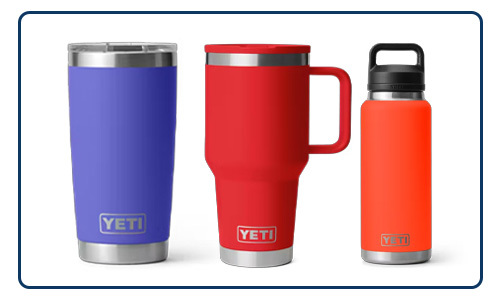
Shop insulated drinkware for keeping compatible hot and cold beverages at a more consistent temperature while aboard the boat or relaxing on shore.
YETI Hard Coolers
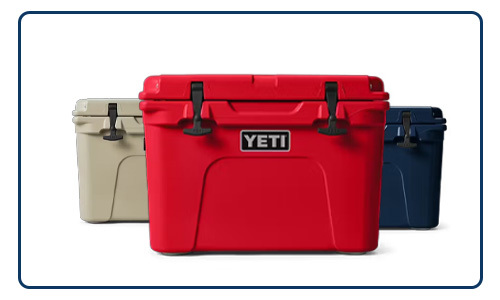
YETI hard coolers provide rigid construction and insulated storage for food, beverages, ice, and other temperature-sensitive contents. Compact models can be easier to carry and fit into limited storage areas, while larger coolers provide additional capacity for longer trips or larger groups.
A compact hard cooler for personal provisions, shorter outings, and boats where easy carrying and a smaller footprint are important.
A portable hard cooler offering additional room for food and drinks while remaining manageable for day trips and smaller crews.
A larger hard cooler for boaters who need more capacity for group outings, fishing trips, weekend provisions, and extended days on the water.
YETI Soft and Backpack Coolers
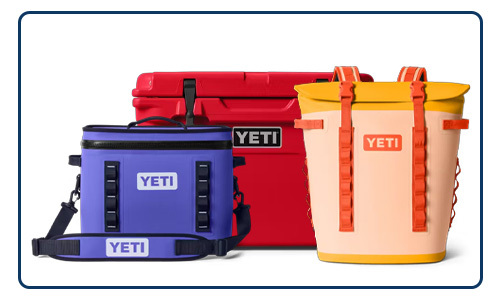
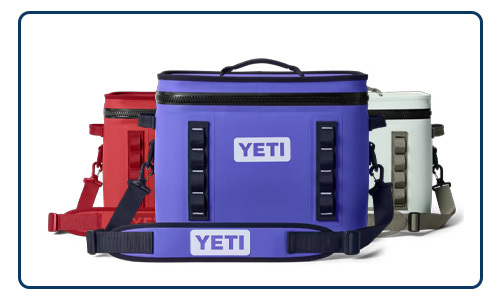
YETI soft coolers offer flexible insulated storage in a more portable format. They can be useful when the cooler must be carried from a vehicle to the dock, moved around the boat, or stored in an area where a rigid hard cooler would be less convenient.
Backpack coolers distribute the load across the shoulders and leave the user’s hands available for carrying other equipment. Before choosing a soft cooler, compare its exterior dimensions, carrying style, closure, and usable capacity.
YETI Hopper M20 Backpack Cooler
A wearable soft cooler for hands-free transport between the vehicle, dock, beach, campsite, and boat.
A compact soft cooler for personal drinks, lunches, and shorter excursions where portability and convenient access are priorities.
A portable soft cooler with more room than the smaller Hopper Flip 8 for day trips, shared refreshments, and additional provisions.
YETI Hard Coolers vs. Soft Coolers
A hard cooler may be the better option when durability, a rigid shape, and greater capacity are the main considerations. Hard coolers also provide a stable storage container, but they generally require more room and can become difficult to move after being fully loaded.
A soft cooler is easier to carry and may fit into locations where a hard-sided model would be inconvenient. Soft coolers are useful for personal provisions and day trips, although their flexible construction and carrying format serve a different purpose than a larger hard cooler.
Neither type is automatically right for every boat. Measure the storage area, estimate the required capacity, and consider how far the loaded cooler must be carried.
Choosing the Right YETI Cooler Size
Start with the number of people, trip length, and type of contents you expect to carry. A personal cooler may be sufficient for lunch and drinks, while group outings or longer trips require space for additional food, beverages, and ice.
Compare the cooler’s exterior dimensions with the intended location aboard the boat. Make sure the cooler does not block walkways, access panels, hatches, controls, or emergency equipment.
Capacity alone does not describe portability. Consider the cooler’s empty weight, loaded weight, handles, carrying method, and the path from the vehicle to the boat.
Using and Securing a YETI Cooler on a Boat
A cooler should be placed where it will not slide, tip, or obstruct movement as the boat accelerates, turns, or encounters waves. Use an appropriate nonslip surface or secure the cooler with a compatible restraint system when conditions require it.
Keep the cooler clear of controls, fuel-system components, bilge access, battery compartments, and required safety equipment. Before using any cooler as a seat or casting platform, confirm that the particular model and placement are appropriate for that use.
Getting Better Ice Retention
Pre-chilling the cooler and its contents reduces the amount of ice used to cool warm surfaces and beverages. Load already-cold food and drinks whenever possible and use enough ice to fill open air space inside the cooler.
Keep the lid or closure shut as much as possible and place the cooler in a shaded area when available. Ice performance varies with the cooler model, ambient temperature, direct sunlight, contents, ice type, packing method, and how frequently the cooler is opened.
Do not rely on a universal number of days for ice retention. Real-world conditions can produce significantly different results, even when using the same cooler.
Cleaning YETI Coolers and Drinkware
Remove food, liquids, and melted ice after use. Clean the product according to its care instructions and allow it to dry completely before storing it. Leaving a cooler closed while damp can contribute to lingering odors.
After boating in saltwater, wipe or rinse exposed surfaces as appropriate and clean away salt residue, sand, bait, and food debris. Pay particular attention to handles, closures, gaskets, and areas where residue can collect.
YETI FAQs
What is the difference between a YETI hard cooler and a YETI soft cooler?
A YETI hard cooler provides rigid insulated storage and is generally suited to larger loads or longer outings. A YETI soft cooler prioritizes portability and flexible storage for personal use and day trips.
What size YETI cooler should I choose for a boat?
Consider the number of people, trip duration, amount of food and beverages, space needed for ice, available storage area, and how far the loaded cooler must be carried.
How long will a YETI cooler keep ice?
Ice retention varies with the cooler model, weather, sunlight, ice type, packing method, contents, and how frequently the cooler is opened. There is no single retention time that applies to every use.
Should I pre-chill my YETI cooler?
Pre-chilling the cooler and loading cold contents can improve ice performance because less cooling energy is spent lowering the temperature of the cooler and its contents.
How should I secure a YETI cooler on a boat?
Place the cooler where it will not obstruct movement or equipment, and use an appropriate nonslip surface or compatible restraint system to prevent sliding or tipping while underway.
Can I use a YETI cooler as a seat?
Do not assume that every cooler or location is suitable for seating. Check the guidance for the specific model and make sure the cooler is placed securely where it will not shift or create a safety hazard.
How should I clean a YETI cooler after boating?
Empty the cooler, wash it according to its care instructions, remove salt and food residue, and allow it to dry completely before closing it for storage.
Is the YETI Hopper M20 easier to carry than a traditional cooler?
The backpack design allows the load to be carried on the shoulders and keeps the user’s hands available. The best choice still depends on the required capacity, loaded weight, and carrying distance.