
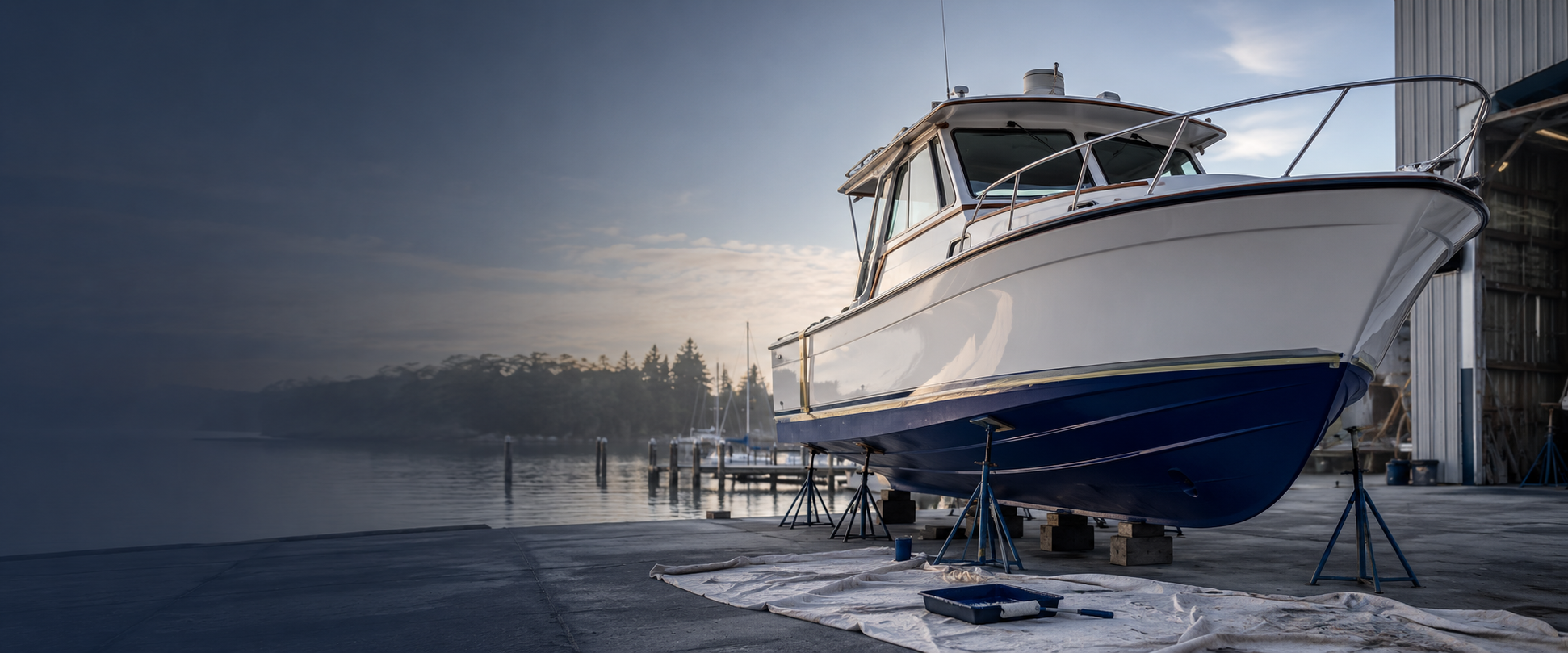
Interlux Boat Paint and Marine Coatings
Interlux offers marine coatings for protecting, restoring, and refinishing boats above and below the waterline. Whether you are applying antifouling bottom paint, sealing a fiberglass hull with an epoxy barrier coat, refreshing topside surfaces, or protecting exterior wood, choosing products designed for the surface and operating conditions is essential.
Before beginning a project, review the product instructions for surface preparation, compatible primers, application methods, coverage, overcoating times, and launch requirements. When applying a new coating over an existing finish, verify that the two products are compatible.
Interlux Antifouling Bottom Paint
Antifouling paint helps control marine growth on hull surfaces that remain in the water. The appropriate formula depends on factors such as hull material, existing paint, water conditions, boat speed, and whether the boat is used continuously or stored between outings.
Interlux Fiberglass Bottomkote NT
A versatile antifouling bottom paint for boaters looking to protect compatible fiberglass hulls from marine growth.
Interlux Micron CSC Antifouling Bottom Paint
A multi-season ablative coating designed to gradually wear away during use, helping reduce paint buildup over repeated applications.
Interlux ACT Ablative Antifouling Bottom Paint
An ablative bottom paint formulated to expose fresh antifouling material as the coating wears during normal boat use.
Interlux Trilux 33 Antifouling Bottom Paint
An antifouling option developed for compatible fiberglass, wood, steel, and properly prepared underwater aluminum surfaces.
Interlux Trilux Prop & Drive Antifouling Paint
Designed for hard-to-coat underwater components such as compatible outdrives, lower units, propellers, and other properly prepared metal surfaces.
Interlux Barrier Coats and Marine Primers
Primers and barrier coats prepare compatible surfaces for finish coatings and help address specific protection needs. Epoxy barrier systems are commonly used on properly prepared fiberglass hulls, while marine primers help promote adhesion and create a consistent base for compatible topside finishes.
Interlux InterProtect Epoxy Barrier Coat Kit – Gray
A gray two-part epoxy system used to create a protective barrier on properly prepared fiberglass, metal, and underwater surfaces.
Interlux InterProtect Epoxy Barrier Coat Kit – White
The white version of the InterProtect epoxy system provides a contrasting color that can help identify coverage between successive coats.
Interlux Pre-Kote Plus Boat Primer
A marine primer used beneath compatible one-part topside finishes to promote adhesion and help create a smooth, uniform surface.
Interlux Topside Boat Paint
Topside paint is used on compatible areas above the waterline, including hull sides and other exterior surfaces. Careful preparation, fairing, sanding, priming, and application help produce a smoother and more durable finish.
Interlux Toplac Plus Marine Paint
A one-part topside finish developed to provide a smooth, glossy appearance on compatible, properly prepared surfaces above the waterline.
Interlux Varnish and Cetol Wood Finishes
Marine varnishes and wood finishes help protect and enhance properly prepared exterior wood and teak. The right choice depends on the desired appearance, the existing finish, exposure conditions, and the maintenance schedule.
Interlux Cetol Marine Natural Teak Finish
A marine wood finish designed to protect exterior wood while creating a natural teak-toned appearance.
Interlux Cetol Marine Gloss Finish
A clear gloss coating used over compatible Cetol systems when a shinier finished appearance is desired.
Interlux Cetol Marine Wood Finish
A durable finish for compatible exterior marine wood surfaces where ongoing weather protection and an attractive appearance are required.
Interlux Schooner Marine Varnish
A traditional marine varnish formulated to create a rich, high-gloss finish on properly prepared interior and exterior wood.
Shop Marine Varnish and Wood Finishes
Interlux Surface Preparation and Paint Thinners
Proper surface preparation is one of the most important parts of any marine painting project. Use only the cleaner, thinner, or reducing solvent recommended for the selected coating and application method. Substituting an incompatible solvent can affect application, curing, adhesion, and finish quality.
Interlux Fiberglass Solvent Boat Wash
A surface-preparation cleaner for removing compatible contaminants from fiberglass before sanding, priming, or painting.
Interlux Special Marine Paint Thinner
A marine paint thinner intended for use with specified compatible Interlux coatings and recommended cleanup applications.
Interlux Marine Paint Reducing Solvent
A reducing solvent for designated Interlux products when adjustment is permitted by the coating instructions and application conditions.
Interlux Marine Brushing Thinner
A brushing thinner used with specified compatible coatings when application conditions require adjustment.
Choosing the Right Interlux Marine Coating
Begin by identifying whether the project is below the waterline, above the waterline, or on a wood or metal component. Next, determine the surface material and identify any coating already present. Existing paint that is sound and compatible may require cleaning and sanding, while unknown, damaged, or incompatible coatings may need additional preparation or removal.
Also consider how the boat is operated and stored. Boats kept in the water have different antifouling requirements than trailered or seasonally stored boats. For underwater metals and aluminum surfaces, confirm that every primer and antifouling coating in the system is approved for that material.
Always follow the current Interlux application instructions for preparation, film thickness, number of coats, temperature range, drying time, overcoating interval, and launch window.
Interlux Boat Paint FAQs
What type of Interlux paint should I use below the waterline?
Use an antifouling bottom paint selected for your hull material, local fouling conditions, boat speed, storage practices, and existing coating. Confirm compatibility before applying new paint over an old bottom-paint system.
What is the difference between bottom paint and topside paint?
Bottom paint is designed for submerged hull surfaces and often contains antifouling ingredients that help control marine growth. Topside paint is intended for compatible areas above the waterline and focuses on appearance, weather resistance, and surface protection.
Do I need a barrier coat before applying bottom paint?
Not every project requires one. An epoxy barrier system may be used on properly prepared fiberglass hulls as part of blister prevention or repair, or when establishing a new compatible coating system. Follow the product instructions for the hull material and existing surface condition.
Can I apply Interlux bottom paint over existing paint?
It may be possible when the existing coating is sound and compatible with the new paint. Identify the old coating whenever possible and follow the required cleaning, sanding, priming, or tie-coat instructions before application.
Can I use regular bottom paint on an aluminum boat or sterndrive?
Do not assume that every bottom paint is suitable for aluminum or underwater metals. Select an antifouling system specifically approved for the surface and follow all recommended preparation and priming steps.
How many coats of Interlux paint do I need?
The required number of coats varies by product, surface, application method, and intended service. Use the current product instructions to determine coverage, film thickness, number of coats, and whether an additional signal coat is recommended.
Can I use any thinner with Interlux boat paint?
No. Use only the thinner or solvent specified for the particular coating and application method. An incompatible thinner can affect flow, curing, adhesion, and the finished appearance.